Review: Christmas Tree by N. C. Wyeth Illustrations
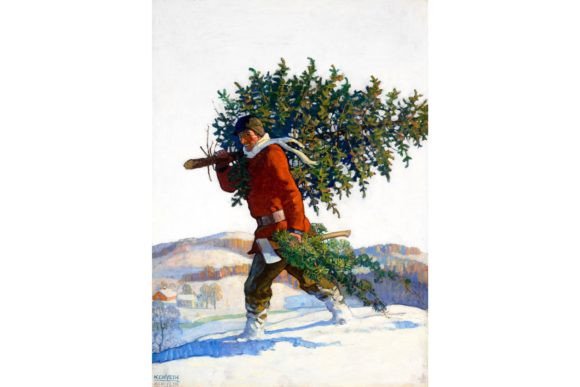
As a graphic designer constantly scouting for assets that bridge the gap between nostalgic charm and commercial viability, my first impression of Christmas Tree by N. C. Wyeth was one of immediate warmth. This isn't just another generic holiday clipart; it carries the weight of early 20th-century illustration, offering a textured, hand-painted aesthetic that feels incredibly rare in today's sea of flat vector graphics. When I pulled this file into my workspace to evaluate it for a potential client project—a boutique candle brand looking to launch a limited-edition winter collection—the mood it set was undeniable. It evokes a sense of tradition, storytelling, and cozy domesticity that modern minimalist designs often struggle to capture.
Setting the Visual Tone for Seasonal Branding
The core strength of Christmas Tree by N. C. Wyeth lies in its atmospheric quality. Unlike crisp, digital-born illustrations, this asset brings an organic, slightly weathered feel that suggests history and authenticity. For a client aiming to position their products as "handcrafted" or "heritage-inspired," this piece is a goldmine. In the context of brand identity, using such a distinct illustration can instantly differentiate a small business from competitors relying on stock photography or overused Santa icons. The rich tones and classic composition provide a strong anchor for marketing visuals, allowing the brand to tell a story without saying a word.
When considering where this fits within a broader design bundle or seasonal campaign, it shines brightest in large layout areas. It works exceptionally well as a hero graphic on a website landing page or as the central focus of a packaging design. Imagine a kraft paper box for those artisanal candles; placing this illustration front and center creates an immediate emotional connection with the consumer, suggesting that the product inside is equally thoughtful and traditional.
Practical Applications Across Media Formats
In real-world design scenarios, versatility is key. I tested Christmas Tree by N. C. Wyeth across various mediums to see how it holds up. For print-on-demand sellers, particularly those on Etsy offering holiday apparel, this image translates beautifully onto t-shirt designs and tote bags. The painterly style masks minor printing imperfections better than high-contrast line art, making it forgiving for DTG (Direct to Garment) printing. Similarly, for crafters using Cricut machines, while this is primarily a raster image, it serves as an excellent reference for creating layered sublimation designs or as a background element in complex Cricut projects where a vintage vibe is needed.
For digital marketers and content creators, the asset is a powerhouse for social media graphics. On platforms like Pinterest and Instagram, where visual stop-power is crucial, the intricate details of the tree draw the eye immediately. It elevates a standard promotional post into something that feels like editorial content. I also envision this working wonderfully in editorial design, such as a holiday lookbook or a blog header discussing winter traditions. When paired with a sturdy serif font or a flowing script font, the combination creates a sophisticated Canva template that users would eagerly download for their own handmade businesses.
Navigating Limitations and Hierarchy Challenges
However, professional judgment requires knowing when not to use an asset. While Christmas Tree by N. C. Wyeth is stunning, its detailed, painterly nature means it can get muddy if scaled down too small. It is not suitable for tiny favicon icons or intricate patterns where the brushstrokes would blur into noise. Furthermore, in projects requiring a ultra-clean, corporate, or futuristic modern design aesthetic, this illustration might feel too rustic or old-fashioned. It demands space to breathe; placing it in a crowded layout with competing elements will destroy the visual hierarchy and confuse the viewer.
Designers must also be cautious with background contrast. Because the original artwork likely features deep shadows and varied mid-tones, placing it on a busy or dark background could render it invisible. It performs best on light, neutral backgrounds like cream, off-white, or soft beige, which allow the colors of the tree to pop without clashing. For logo design, this asset is better suited as a secondary mark or a seasonal variation rather than a primary logo, as its complexity might hinder recognition at very small sizes on business cards or mobile screens.
Technical Checks and Commercial Viability
Before finalizing any asset for a paying client, I run through a strict checklist. With Christmas Tree by N. C. Wyeth, checking the resolution is paramount. Since this is likely a reproduction of a classic painting, ensuring the DPI is high enough for large-format printing (like posters or banner ads) is essential to avoid pixelation. If the file comes as a PNG design with transparency, I inspect the edges closely to ensure there are no halos or leftover white pixels from the original scan. If an SVG design or vector trace is available, that offers superior scalability, but one must ensure the tracing process hasn't lost the delicate texture of the original brushwork.
Another critical step is testing the asset in black and white. Many commercial design projects, such as newspaper ads or single-color merchandise, require monochrome compatibility. Does the tree still hold its form and impact without color? In this case, the strong values of the original painting usually translate well, but it's a necessary verification. Additionally, pairing the illustration with the right typography is vital. A heavy display font might overwhelm the art, while a delicate handwritten font could get lost. I recommend experimenting with classic serifs to match the era of N.C. Wyeth or clean sans-serifs to create a pleasing contemporary contrast.
Finally, and perhaps most importantly, is the licensing. N.C. Wyeth's works are historically significant, and while many may be in the public domain, specific digital reproductions or curated collections sold on creative marketplace platforms may have their own terms. Always confirm the commercial license before using this for a client's Etsy product line or a major ad campaign. Ensuring you have the rights to use the asset for small business branding protects both the designer and the client from legal complications.
In conclusion, Christmas Tree by N. C. Wyeth is more than just a holiday image; it is a strategic tool for designers looking to inject soul and narrative into their work. Whether used for a product mockup, a sticker design, or a full-scale packaging design, it offers a level of artistic integrity that resonates deeply with audiences tired of sterile, digital perfection. By understanding its strengths in creating mood and its limitations regarding scale and context, designers can leverage this masterpiece to create truly memorable and effective visual communications.