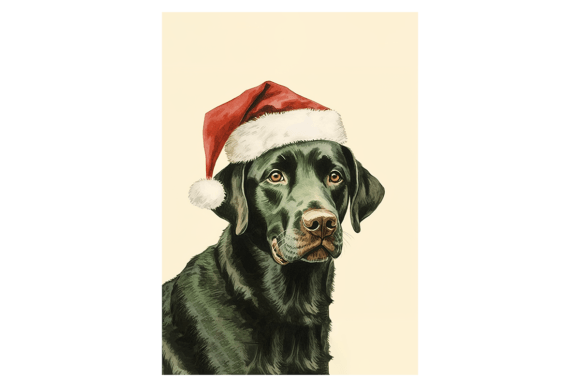
Labrador Christmas Card: A Designer's Review
As someone who spends more time staring at stitch maps than most people spend looking at actual art, I approach every new machine embroidery design with a mix of excitement and skepticism. We've all been there: you download a file that looks adorable on the screen, only to find out it's a tangled mess of underlay or impossible to stitch on anything other than perfect cotton. That is why I took a close look at the Labrador Christmas Card design before committing it to any client project or holiday inventory. This isn't just about whether it's cute; it's about whether it holds up under the needle and delivers value to the end user.
First Impressions and Visual Personality
When I first loaded the preview for Labrador Christmas Card, the immediate takeaway was its warmth. In the world of Illustrations adapted for thread, there is often a loss of nuance. Complex shading gets flattened, and delicate lines disappear into bulky satin columns. However, this design manages to retain a charming, hand-drawn aesthetic that translates surprisingly well to embroidery. The layout feels balanced, avoiding the common pitfall of overcrowding the center with too much detail that the machine simply cannot resolve.
The mood is distinctly festive without being cliché. It captures that cozy, family-oriented vibe that sells exceptionally well during the fourth quarter. For an Etsy seller or a boutique owner, visual personality is currency. This design speaks to dog lovers specifically, but broadly enough to fit into general holiday decor. The line work suggests a combination of fill stitch for the body of the Labrador and likely finer running stitch or narrow satin for the facial features and holiday accents. This variety in stitch types is crucial because it creates texture, making the finished product feel premium rather than flat.
Real-World Application: The Holiday Tote Scenario
To truly test the viability of this design, I mentally walked through a real-life production scenario. Imagine a customer orders a set of personalized tote bags for their family's Christmas gifts. They want something durable, washable, and visually striking. This is where Labrador Christmas Card shines as a potential tote bag design.
On a canvas tote, the structure of the fabric supports the stitching well. The design's scale appears appropriate for a standard 5x7 or 6x10 hoop, allowing it to sit prominently on the front of the bag without overwhelming the material. If I were producing these for a craft business, I would lean into the "personalized gift" angle. Adding a family name beneath the illustration using a complementary font could turn a simple graphic into a heirloom-quality item. The clarity of the shapes ensures that even from a distance—say, hanging on a hook in a busy kitchen—the subject is instantly recognizable as a beloved pet in a holiday setting.
Beyond totes, this design has strong potential for sweatshirt embroidery. The soft, rounded forms of the illustration complement the casual drape of fleece or French terry cloth. Unlike highly geometric designs that can look stiff on soft garments, the organic nature of this Labrador illustration moves with the fabric. It would also work beautifully as an embroidered patch, provided the density is managed correctly to prevent curling at the edges.
Navigating Fabric Challenges and Stitch Density
However, no design is universal, and a professional review must address limitations. While Labrador Christmas Card is versatile, it requires careful consideration regarding stitch density and fabric choice. If you are planning to stitch this on a thin, stretchy fabric like a lightweight tri-blend tee, you must be vigilant. Dense areas, particularly if the design uses heavy fill stitches for the dog's fur, can cause puckering if the stabilizer isn't robust enough. I always recommend testing on scrap fabric of the exact same weight and weave before cutting into customer material.
Textured fabrics present another variable. On a waffle knit or a heavily textured linen, fine details might get lost. The thread colors chosen will play a massive role here. High contrast is usually safe, but for a holiday design, subtle tonal variations can add depth. If the design relies on very small details to define the dog's expression, those might vanish on a dark, fuzzy fabric. In such cases, simplifying the color palette or using a lighter backing stabilizer to boost visibility might be necessary.
Curved surfaces, like caps, require extra scrutiny. Unless the design was specifically digitized with cap framing in mind, the horizontal spread of the illustration might distort over the front panel of a hat. It is generally safer to stick to flat applications like pillow covers, tea towels, or aprons unless you have confirmed the digitizing includes push-pull compensation for curved seams.
Commercial Viability and Brand Consistency
For those running a small shop product line, consistency is key. Does Labrador Christmas Card fit your brand? If your aesthetic is rustic and handmade, this illustration style is a perfect match. It enhances handmade presentation by looking less like a mass-printed transfer and more like a crafted piece of art. This perception of quality directly influences customer trust and allows for a higher price point on your custom apparel or home goods.
From a marketing standpoint, this design is highly "instagrammable." The subject matter—a dog combined with Christmas—is evergreen content. Using this in your printable mockup previews for digital listings can significantly boost engagement. Buyers love seeing how a design looks on actual garments, not just white backgrounds. Showing this stitched on a navy blue sweatshirt or a cream-colored apron helps the customer visualize the personalized gift in their own home.
Practical Notes for the Embroiderer
Before you commit to a full production run, here are a few technical checkpoints I recommend:
- Check the License: Always verify the licensing terms attached to the digital embroidery file. Some designers allow unlimited personal use but restrict commercial sales or require an extended license for items sold in large quantities.
- Thread Contrast: Test the design in black and white (or grayscale) on your screen first. This helps you judge the value contrast independent of color, ensuring the image remains readable even if a customer requests non-traditional thread colors.
- Hoop Size Verification: Confirm the required hoop size against your machine's capabilities. Don't assume it fits a 4x4 hoop just because it looks small; intricate illustrations often need room to breathe.
- Wash Testing: Since this is likely intended for items that will be used and washed (like towels or clothes), run a wash test on your sample. Check for thread breakage, color bleeding, or fabric distortion after the first cycle.
In conclusion, Labrador Christmas Card is a strong contender for the holiday season. It balances artistic charm with technical feasibility, making it a reliable asset for both hobbyists creating gifts for family and entrepreneurs building seasonal inventory. Like any applique design or complex illustration, its success depends on the skill of the operator and the suitability of the materials. But with the right preparation, it has the potential to become a standout piece in your embroidery project portfolio, bringing joy to dog lovers and adding a touch of professional polish to your handmade creations.